

Berlin – August 2026
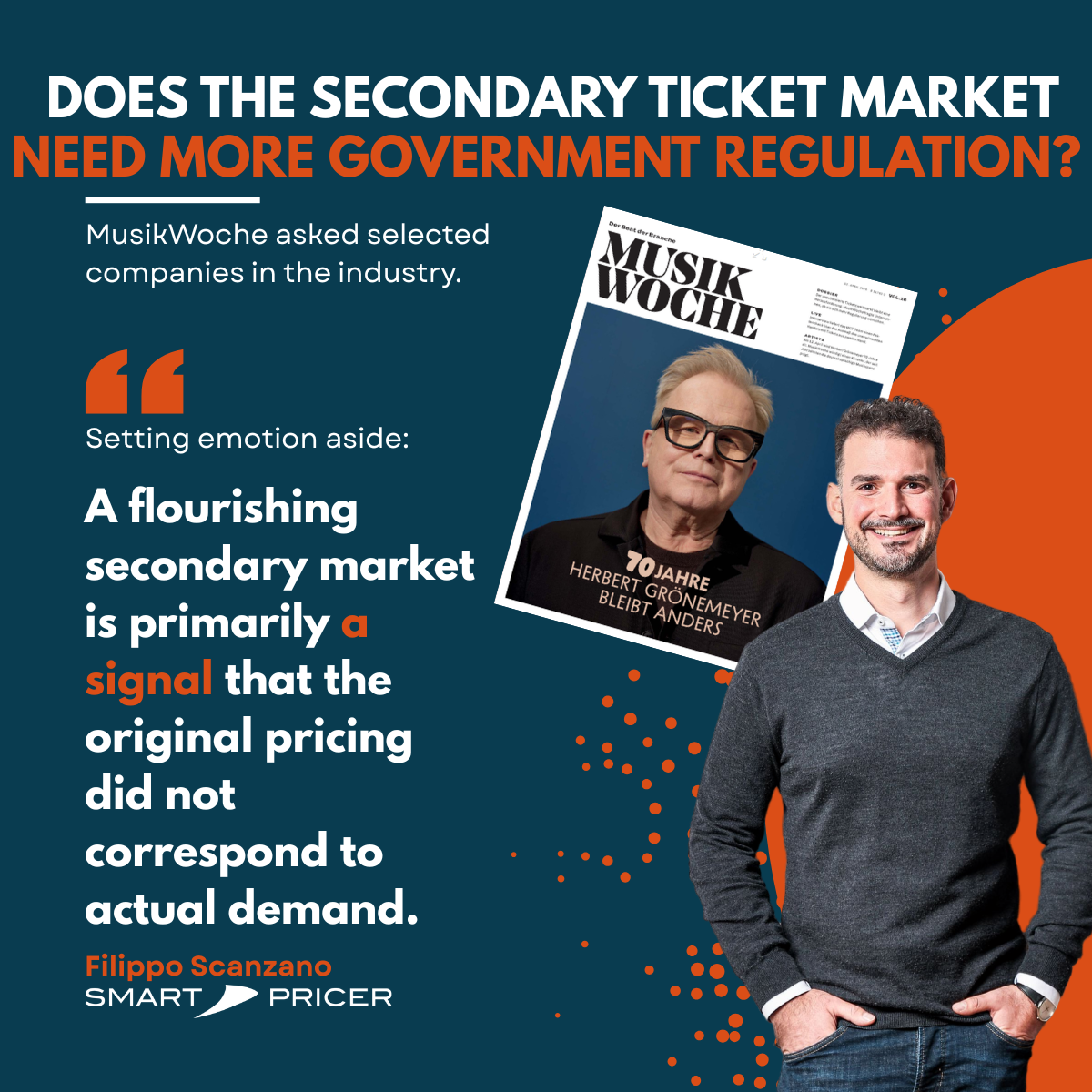
For years, the secondary ticket market has been one of the most controversial topics in the live entertainment industry. Hardly any other topic is discussed as emotionally. Promoters criticize speculative resales. Fans are annoyed by massively inflated prices. Industry associations demand stricter rules. Politicians discuss regulation. Yet, despite all the justified criticism, a simple question arises: What does a flourishing secondary market actually tell us? The answer is: It is, above all, a market signal.
The secondary market doesn’t emerge by chance
When a concert sells out within minutes and tickets are offered shortly after on platforms for x-times the price, this is primarily an indication of one thing: The actual demand is higher than what the original sales price reflects.
This does not mean that unregulated resales are desirable. However, it does mean that a significant portion of value creation shifts outside the official distribution channels. The crucial question is therefore not: “How do we prevent every resale?”
But rather: “Why is there so much economic incentive for resale in the first place?”
The real challenge: lost value creation
If a ticket is sold for 80 euros and later resold for 220 euros, an additional 140 euros of market value is created. This value is indeed created by artists – or rather by promoters, producers, or the venue.
Nevertheless, it is not realized by them. The question is therefore, who skims it off?
In many cases, this added value flows to external, unauthorized market participants who neither organized the event nor bore the economic risk. This is exactly where the real problem lies.
Why regulation is important, but not sufficient
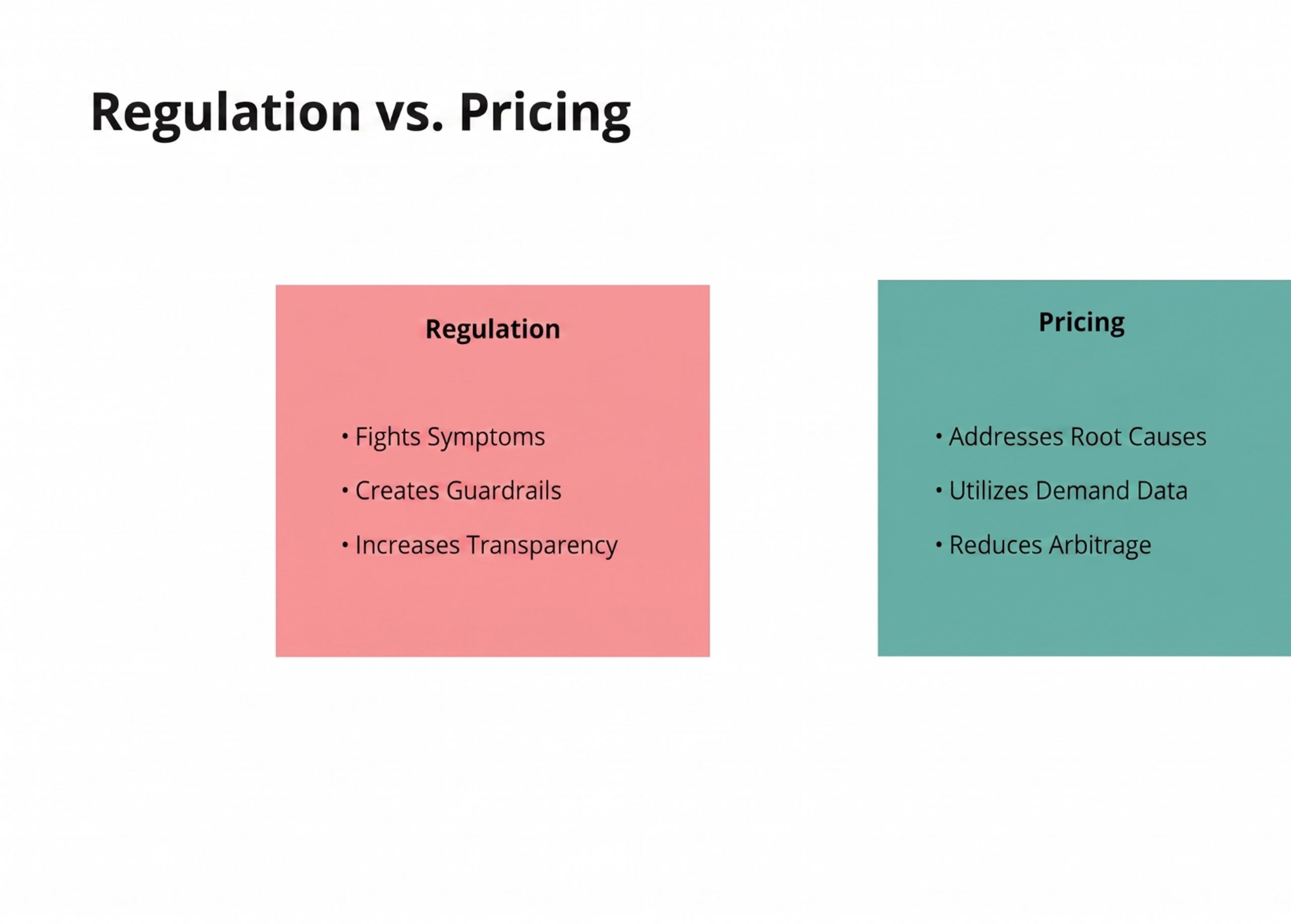
More transparency, stronger consumer rights, and effective measures against fraud are sensible. Equally important are measures against bots or abusive, profit-oriented mass purchases. But even the strictest regulation will not override a fundamental market mechanism: When supply and demand diverge significantly, a market emerges. Experience from numerous industries shows that regulation can curb symptoms, but the underlying economic dynamics remain. Therefore, the discussion should not end with regulation.
The strategic question is: Who controls the price?
The crucial challenge for promoters is to regain control over their pricing strategy. Many ticket prices are set today months before the event begins. At this point in time, the actual demand is often only visible to a limited extent.
Only later does it become apparent:
- Which segments are particularly in demand
- Which target groups show a higher willingness to pay
- Which dates perform stronger
- Which seats are systematically undervalued
Those who cannot react then leave a part of the value creation to the secondary market.
From static prices to data-driven decisions
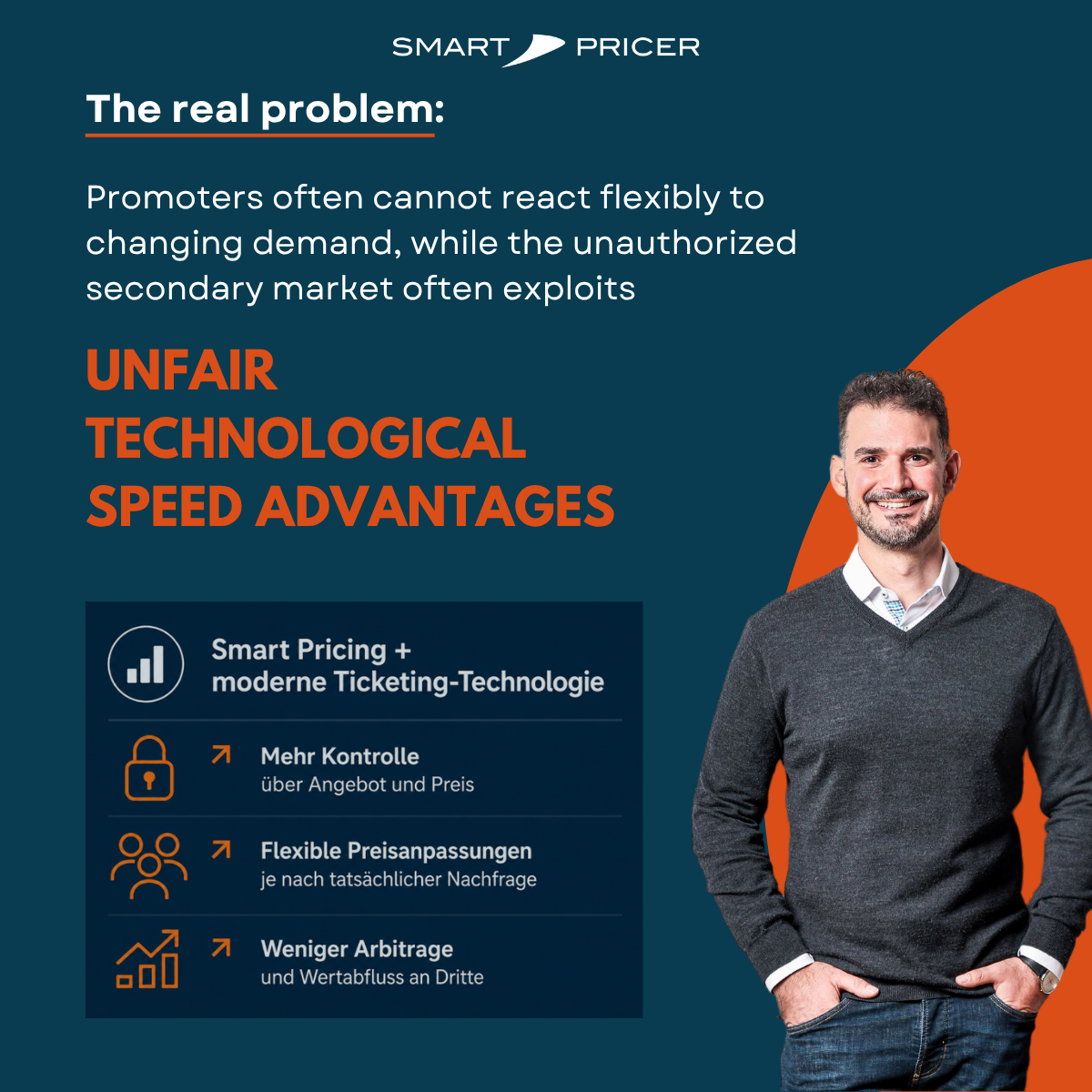
Modern revenue management systems enable a different approach. Instead of setting prices once and then leaving them unchanged, demand developments can be continuously taken into account. This is not about increasing every price to the maximum. It is about utilizing market information better.
The result:
- higher revenues for promoters
- better control options
- less arbitrage potential
- lower attractiveness of speculative resales
Fairness and pricing are not mutually exclusive
A common misconception is to view fairness and data-driven pricing as opposites. In fact, both goals can be pursued together.
Promoters can:
- Define price caps
- Reserve quotas for specific target groups
- Offer socially acceptable categories
- Specifically limit dynamic models
The question is not whether prices are controlled. The question is who takes over the control.
The promoter – or the secondary market.
The future lies in pricing sovereignty
The debate about the secondary ticket market will continue to accompany us. And yes: Regulation will play an important role in this. In the long term, however, the industry will benefit most if it addresses the root causes and not exclusively the symptoms. The better demand is understood, the less room remains for speculative value skimming. Because ultimately, economic value should remain where it is created: with artists, promoters, and the teams that make live experiences possible.