

Berlin – August 2026
Cultural institutions today face a dual challenge: declining subsidies on the one hand and rising costs on the other. Many venues are searching for ways to strengthen their revenues – without losing their accessibility or cultural mission. One answer to this delicate balance can be dynamic pricing – a data-driven, flexible pricing mechanism that aligns demand, capacity, and audience expectations.
What is Dynamic Pricing, Really?
Dynamic pricing means that ticket prices are dynamically adapted to factors such as demand, timing, capacity utilization, and audience type. This allows better management of how visitors purchase tickets – similar to airlines or hotels, but always with a focus on fairness and accessibility. Importantly: The pricing logic must be transparent so that audience trust is maintained.
Opportunities for Cultural Institutions
1. Improved Capacity Utilization
Prices adjust to demand – e.g., cheaper tickets for early purchases or low demand, higher prices during peak demand. This helps fill remaining seats better and stabilize revenue.
2. Strengthening Fairness
With clear rules in dynamic pricing, different needs can be addressed – such as early birds, families, or student visitors.
3. Economic Sustainability
Data-driven pricing strategies help expand financial flexibility without neglecting the cultural mission – e.g., through higher earned revenue or targeted budgets for new programs.

Challenges & Limitations
Dynamic pricing is not an end in itself. Without careful communication, it can be perceived as non-transparent or unfair. It also requires institutions to establish data-driven processes and carefully analyze how prices are structured.
Successful Case Studies from Practice
Various institutions with very different starting positions show that dynamic pricing works in the cultural sector.
- Grand Théâtre de Genève
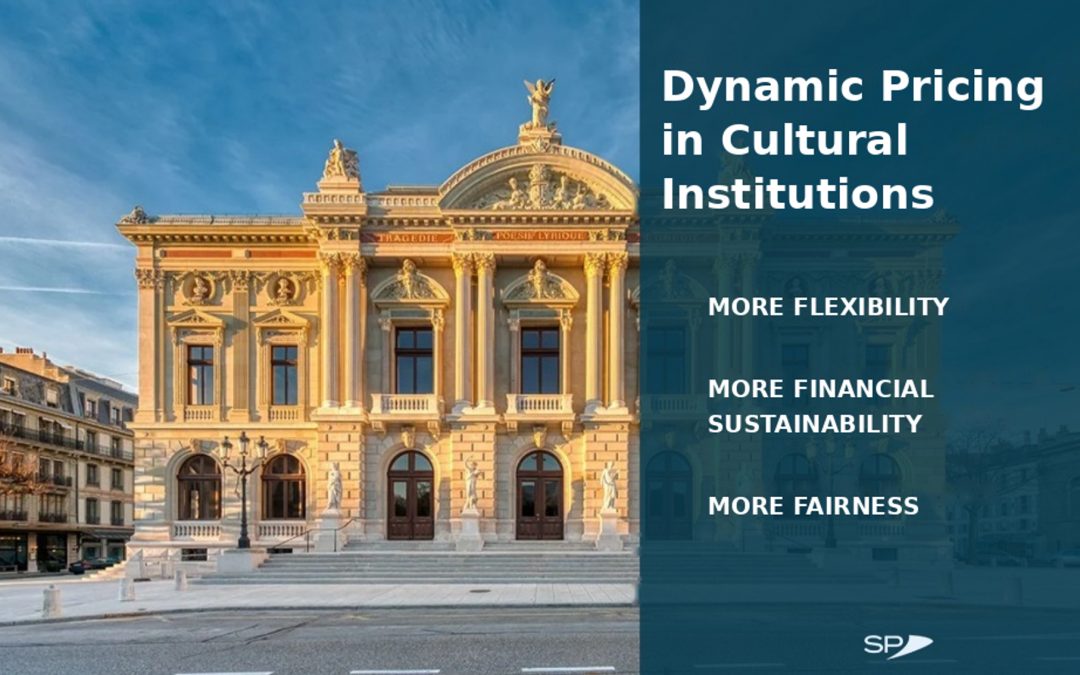
The traditional opera house first analyzed historical sales data and developed a dynamic pricing model based on it. Today, prices are continuously adjusted to better balance demand and capacity. The result: fewer empty seats, higher attendance, and high acceptance among the audience. - Christmas Garden (DEAG)
At Christmas Garden, dynamic pricing serves to manage visitor flows in a targeted manner. Different price tiers help de-escalate peak times while offering attractive prices for less sought-after time slots. Complaints about pricing were largely non-existent – a good example of how transparent communication contributes to acceptance. - Schloss Benrath
Cultural landmarks also benefit from flexible pricing. At Benrath Palace, admission prices depend on the day of the week and capacity utilization. Visitors receive transparent information directly in the webshop. The result is more predictable visitor numbers, increased online bookings, and more consistent attendance. - Deutsche Klassik / Kuppelsaal Hannover
Dynamic pricing doesn’t always start directly with price changes. For Deutsche Klassik, the initial focus was analyzing existing sales data for the Kuppelsaal in Hanover. Which price tiers work particularly well? Where do empty seats regularly occur? Which target groups show what willingness to pay? The insights gained now form the foundation for future data-driven pricing strategies.
Success Factor: Communication
Introducing dynamic prices is far more than a technical transition. Cultural institutions in particular enjoy long-standing relationships with their audience. Therefore, success is determined not by the pricing strategy alone, but primarily by its communication.
Three core principles have proven successful across numerous practical projects:
- Explain pricing logic clearly
- Define clear price caps
- Offer permanently affordable ticket contingents
This creates transparency instead of uncertainty.
What Challenges Exist?
Naturally, dynamic pricing also brings requirements. Many venues still work with rigid box-office systems or lack the necessary data foundation. In addition, there are uncertainties regarding technical implementation or potential audience reactions. However, modern ticketing systems and intelligent pricing solutions today enable largely automated price management. The key is a careful introduction with clear rules and transparent communication.
Conclusion
Dynamic pricing is far more than an instrument for price optimization.
Used correctly, it helps cultural institutions to:
- Stabilize revenues in the long term,
- Increase capacity utilization,
- Better control visitor flows,
- Address different target groups fairly, and
- Combine economic sustainability with cultural participation.
The examples from opera, palace management, concert organization, and the event industry clearly show: Flexible pricing also works in the cultural sector – when implemented in a data-driven, transparent, and audience-oriented manner.